The Quiet Alternative: High-Level Ketamine Assisted Therapy for the NYC Community
- Samantha Tramuta, LCSW, LAC

- Mar 31
- 7 min read
Why Manhattan Residents Are Choosing Connecticut

If you live in Manhattan and you've been researching ketamine therapy for anxiety or PTSD, you've probably noticed something: there's no shortage of ketamine clinics in New York City.
But here's what you might also have noticed. Many of these clinics feel transactional. You show up, get your infusion, and leave. The focus is on the medication—not on what happens before, during, or after. And while ketamine can be remarkably effective for treatment-resistant anxiety and PTSD, the research is increasingly clear: the real therapeutic power comes from combining ketamine with psychotherapy.
That's called Ketamine-Assisted Psychotherapy (KAP). And it's what brings a growing number of Manhattan professionals, high achievers, and trauma survivors to Connecticut, specifically to our locations in New Haven, Woodbury, and Westport.
This isn't medical tourism. It's a choice. The choice to work with a practice that treats ketamine as part of a therapeutic process, not just a procedure.
Key Takeaways
Ketamine works for anxiety and PTSD by creating a window of neuroplasticity, making the brain temporarily more flexible and able to rewire rigid fear responses
Ketamine-Assisted Psychotherapy (KAP) combines ketamine with trauma-focused therapy for better long-term outcomes than medication alone
IV ketamine infusions allow for precise dose control and gradual onset, which can be more comfortable for anxious patients
Higher Ground offers KAP at two Connecticut locations accessible from Manhattan: Westport (Metro-North accessible) and Woodbury
Treatment typically involves 6-8 sessions over 2-3 weeks, with integration therapy to solidify long-term changes
When Traditional Treatment Stops Working
If you're reading this, you've probably already tried SSRIs. Maybe you've tried SNRIs, benzodiazepines, or beta blockers. You've done therapy…CBT, EMDR, maybe even somatic work.
And yet.
The anxiety still hijacks your day. The PTSD flashbacks still show up when you least expect them. Your brain feels stuck in a loop it can't break.
Here's why: trauma and chronic anxiety create rigid neural pathways. Your brain gets wired for threat detection. The amygdala (your fear center) stays on high alert, and the prefrontal cortex (the part that's supposed to regulate emotions) can't keep up. Traditional antidepressants can help, but they can take 4 to 8 weeks to reach therapeutic levels, and up to 60% of patients with PTSD don't achieve full remission on them.
Ketamine works differently. And it works faster.
How Ketamine Assisted Therapy Rewires the Fear Response
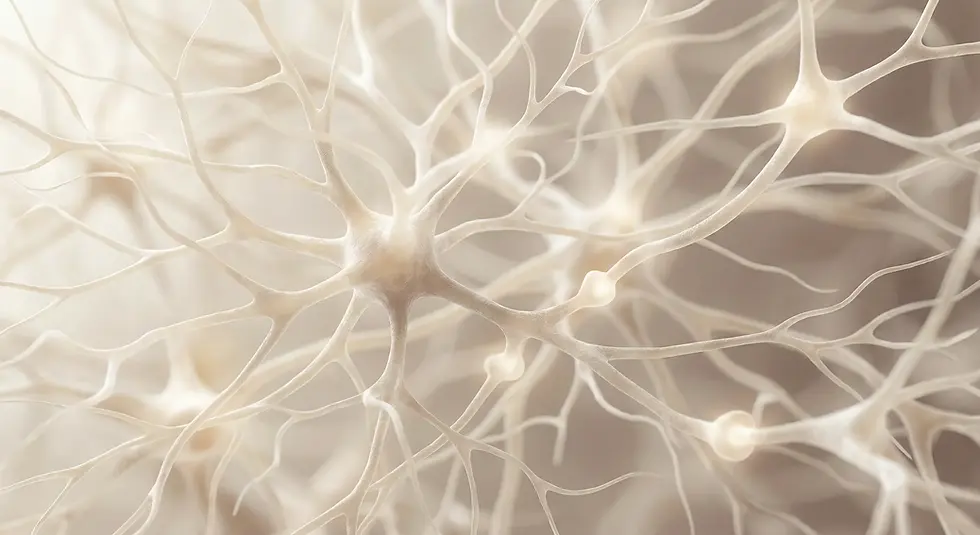
Ketamine targets the glutamate system, the brain's primary excitatory neurotransmitter network. When you receive ketamine, it temporarily blocks NMDA receptors, which triggers a surge in Brain-Derived Neurotrophic Factor (BDNF). BDNF is essentially fertilizer for your brain. It helps grow new synaptic connections.
Trauma weakens these connections. Ketamine helps rebuild them.
But here's the critical part: ketamine doesn't just create temporary relief. It opens a window that usually lasts a few days after treatment, during which your brain is more plastic, more flexible, and more capable of change. That's the window where psychotherapy becomes exponentially more effective.
Research from Yale and other institutions has shown that ketamine, when combined with trauma-focused therapy, can enhance the extinction of traumatic memories. It can help you access and reprocess trauma without being overwhelmed by it. It calms the amygdala and restores communication between your fear center and your prefrontal cortex.
This is why Ketamine-Assisted Psychotherapy (KAP) exists. Ketamine creates the neurobiological conditions for healing. Therapy does the healing.
What Makes KAP Different from "Just Ketamine"
A lot of ketamine clinics in Manhattan offer infusions. Some are excellent. But many operate on a medical model: you come in, you get dosed, you leave. There's minimal preparation, minimal integration, and little to no psychotherapy involved.
KAP is different. It's a three-phase process:
1. Preparation Before your first session, we talk. What are your symptoms? What's your trauma history? What have you tried? What are your goals? We also talk about what the ketamine experience might feel like—because dissociation can be disorienting if you're not prepared for it.
2. The Ketamine Session We use IV infusions because they allow for precise dose control. The medication is delivered slowly over 40 to 60 minutes, and we can adjust in real time if needed. You're monitored throughout. The environment is calm, comfortable, and intentionally therapeutic, not clinical.
3. Integration This is where the work happens. In the days following your session, your brain is in that neuroplastic state. That's when we encourage you to work with a therapist, either one of ours or your own, to process what came up, reframe old patterns, and build new coping mechanisms.
Without integration, ketamine is just a temporary Band-Aid. Integration is a catalyst for lasting change.
Why Manhattan Residents Are Choosing Connecticut
We're not going to pretend the commute doesn't exist. New Haven is about 90 minutes from Manhattan by Metro-North. Woodbury is about 90 minutes by car.
Our Westport Location, opening in May 2026, is easiest via Metro-North Railroad from Grand Central Terminal to Westport or Saugatuck stations, taking roughly 1h 20m.

But here's what we hear from patients who make the trip:
"I tried three ketamine clinics in NYC. They were fine. But this felt like actual therapy."
"The price difference alone made it worth it. And I actually got follow-up care."
"I needed to get out of the city anyway. The space here felt healing in itself."
Connecticut offers something that's harder to find in Manhattan: Space. Time. A therapeutic environment that doesn't feel rushed or transactional. And frankly, lower overhead costs mean more accessible pricing without sacrificing quality of care.
We also offer flexibility. You can do an intensive course (6-8 sessions over 2-3 weeks) and then return for maintenance. Or you can space sessions out. We work with your schedule and your life.
What to Expect: The Treatment Process
Here's what the process looks like at Higher Ground:
Initial Consultation We start with a comprehensive psychiatric and medical evaluation. Ketamine isn't right for everyone, and we need to make sure it's safe and appropriate for you. We'll also talk about your current medications, your therapy history, and your goals.
The Infusion Series Most patients start with 6-8 infusions over 2-3 weeks. Each session lasts about 40-60 minutes, followed by a recovery period. You'll be monitored by a medical professional throughout. Vital signs are tracked continuously.
Integration and Maintenance After your initial series, we help you transition into a maintenance plan. Some patients return once a month. Others come in quarterly. And we strongly encourage ongoing therapy to make the neuroplastic changes stick.

Is This Right for You?
Ketamine therapy isn't for everyone. It's not a cure. It's a powerful tool, and it works best when combined with quality therapy, lifestyle changes, and a willingness to do the work.
Here's who tends to benefit most:
People with treatment-resistant anxiety or PTSD who haven't responded to SSRIs or traditional therapy
High achievers who've "done all the right things" but still feel emotionally stuck
Trauma survivors who want to access and process memories without being retraumatized
People looking for rapid relief while they build longer-term coping skills
If that sounds like you, it's worth a conversation.
Frequently Asked Questions
How quickly does ketamine work for anxiety and PTSD?Many patients notice symptom relief within hours to days after their first session. However, the full therapeutic benefit typically emerges over 6-8 sessions, especially when combined with integrative therapy.
Is ketamine addictive?Ketamine has abuse potential, but in a controlled therapeutic setting with medical supervision, the risk is very low. We screen all patients carefully and monitor for any signs of problematic use.
Will my insurance cover this?Most insurance plans do not currently cover ketamine therapy for mental health conditions (though some cover Spravato, the FDA-approved nasal ketamine). We provide documentation for possible reimbursement, but most patients pay out of pocket.
Can I drive home after a session?No. You'll need someone to drive you, or you can take a rideshare or train. The dissociative effects typically wear off within an hour or two, but we don't recommend driving the same day.
Do I need to stop my current medications?Not necessarily. Ketamine can be used alongside most psychiatric medications, including SSRIs and SNRIs. We'll review your full medication list during your consultation. Benzodiazepines may reduce ketamine's effectiveness, so we typically recommend tapering them if possible.
How long do the effects last?The acute effects (dissociation, mood lift) last a few hours. The therapeutic effects: reduced anxiety, fewer flashbacks, improved mood, can last weeks to months, especially with maintenance sessions and ongoing therapy.
What does the experience feel like?Everyone's different, but most people describe a sense of detachment from their body or surroundings (dissociation), visual or auditory distortions, and a feeling of floating or drifting. Some people have profound emotional or spiritual experiences. It can be disorienting, but it's temporary and closely monitored.
Ready to Explore Ketamine Therapy?
If traditional treatments haven't worked and you're looking for a different approach, we'd like to talk.
Higher Ground offers Ketamine-Assisted Psychotherapy at two Connecticut locations: New Haven (accessible via Metro-North from Grand Central) and Woodbury (90 minutes by car from Manhattan).
Contact us to schedule a confidential consultation. We'll help you determine if KAP is the right next step.
References
Feder, A., et al. (2014). Efficacy of intravenous ketamine for treatment of chronic posttraumatic stress disorder. JAMA Psychiatry, 71(6), 681-688.
Krystal, J.H., et al. (2013). Ketamine: A paradigm shift for depression research and treatment. Neuron, 101(5), 774-778.
Abdallah, C.G., et al. (2015). Ketamine treatment and global brain connectivity in major depression. Neuropsychopharmacology, 42(6), 1210-1219.
Wilkinson, S.T., et al. (2018). The effect of a single dose of intravenous ketamine on suicidal ideation: A systematic review and individual participant data meta-analysis. American Journal of Psychiatry, 175(2), 150-158.
Duman, R.S., & Aghajanian, G.K. (2012). Synaptic dysfunction in depression: Potential therapeutic targets. Science, 338(6103), 68-72.
Dakwar, E., et al. (2020). A single ketamine infusion combined with mindfulness-based behavioral modification to treat cocaine dependence: A randomized clinical trial. American Journal of Psychiatry, 177(2), 125-133.
Rothbaum, B.O., et al. (2014). A randomized, double-blind evaluation of D-cycloserine or alprazolam combined with virtual reality exposure therapy for posttraumatic stress disorder. American Journal of Psychiatry, 171(6), 640-648.



Comments